Author: SEO Marketing

  • 5 Reasons to Consider Fincobox for Your Business Financing Needs

    5 Reasons to Consider Fincobox for Your Business Financing Needs

    Getting access to capital is not always about keeping a business afloat. Sometimes, your business is doing well you have customers, sales and opportunities but your cash flow simply cannot move as quickly as your growth plans. Maybe a major customer has not paid an invoice yet. Maybe you need to purchase inventory before your next sales cycle. Maybe a large order has landed but fulfilling it requires cash up front. Or perhaps you want to invest more in marketing while your revenue is growing. 

    For UAE SMEs, the real question is not simply “Where can I get business financing?” 

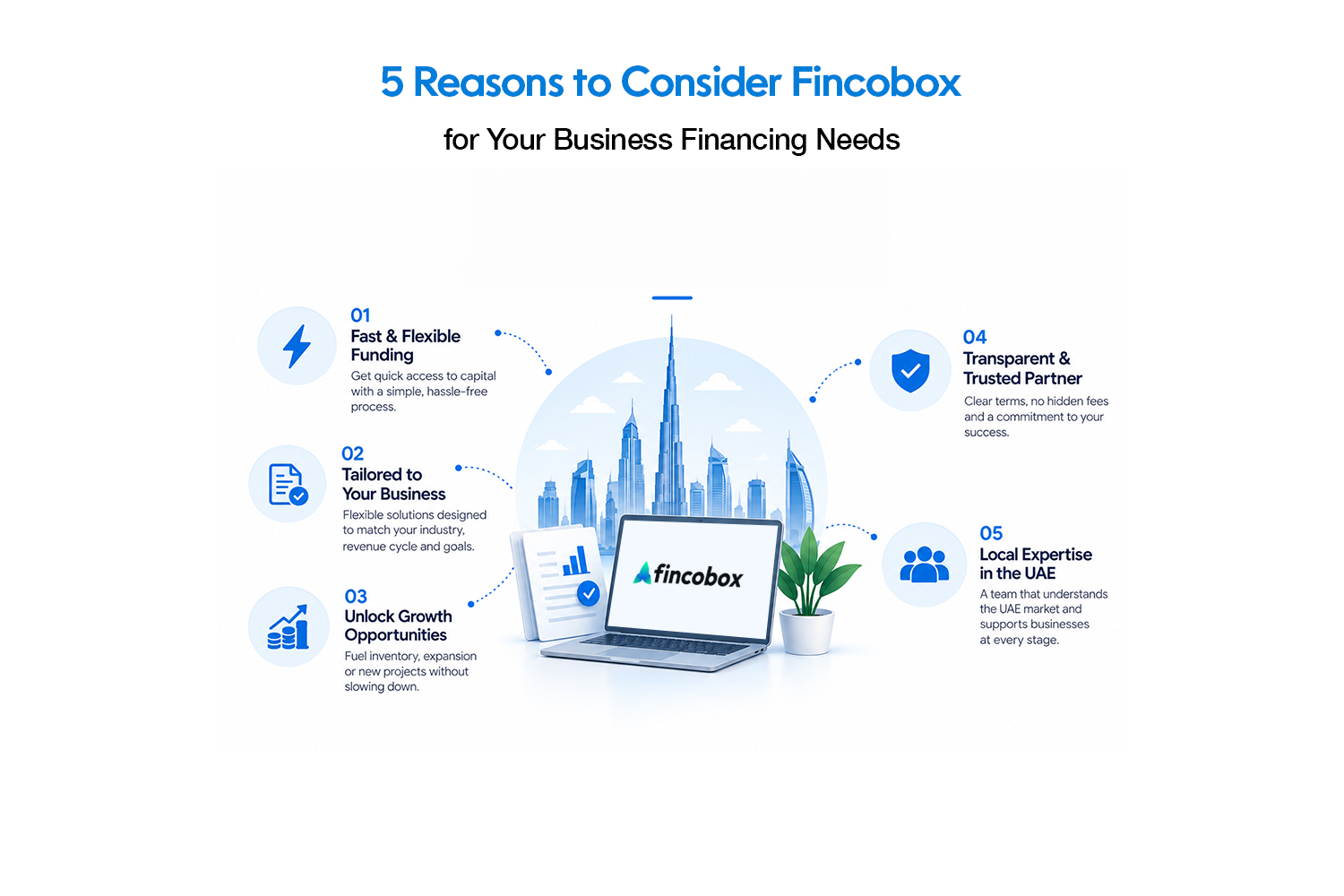
    It is: “Which financing solution actually fits the way my business operates?” Here are five reasons businesses may consider Fincobox for their financing needs. 

    1. You Can Choose Financing Based on Your Business Need 

    Not every cash-flow problem is the same. A business waiting 60 days for a customer to pay has a very different financing requirement from an e-commerce company that needs additional inventory or a distributor trying to fulfil a large purchase order. 

    Fincobox takes a use-case-first approach with four main liquidity solutions: 

    • Invoice Discounting – for eligible businesses with outstanding invoices 
    • Revenue-Based Liquidity – for businesses with consistent revenue 
    • Short-Term Working Capital – for operational liquidity requirements 
    • Purchase Order Liquidity – for eligible businesses that need funding to fulfil purchase orders 

    That distinction matters. Instead of starting with a generic loan amount, businesses can first identify what is creating the cash-flow gap and then explore the financing option that corresponds to it. 

    Which Fincobox solution could fit your situation? 

    Your business situation Potential Fincobox solution 
    Cash is tied up in unpaid invoices Invoice Discounting 
    Consistent revenue and a growth opportunity Revenue-Based Liquidity 
    Temporary operating cash requirement Short-Term Working Capital 
    Large order requiring upfront fulfilment costs Purchase Order Liquidity 

    The appropriate product, eligibility and terms will depend on the individual business and assessment. 

    2. Fincobox Financing Is Non-Dilutive 

    For many founders, getting capital creates another concern: 

    “How much of my business do I have to give away?” 

    With equity financing, raising capital means giving investors an ownership stake in the company. Fincobox takes a different approach. Its liquidity solutions are positioned as non-dilutive, meaning eligible businesses can access financing without selling equity or giving up ownership of their company. This can be particularly relevant for founders who want to maintain control while accessing working capital for growth. For example, a growing D2C brand may want additional capital to increase inventory or marketing spend without bringing an investor into the business simply to fund a short-term requirement. 

    However, non-dilutive does not mean cost-free. Businesses should always review the applicable financing costs, fees, repayment or settlement mechanics and contractual terms before accepting an offer. 

    3. It Is Built Around UAE SME Cash-Flow Challenges 

    Business financing should make sense for the market it serves. Fincobox is focused on UAE SMEs, with solutions designed around common working-capital situations such as unpaid invoices, growing revenue, purchase orders and short-term operational requirements. This is particularly relevant as UAE SMEs continue to focus heavily on growth. According to Mastercard’s 2026 SME Confidence Index83% of UAE SMEs surveyed reported revenue growth over the previous 12 months, while 50% said they were seeking access to credit to support growth. That highlights an important point: Businesses do not always need financing because they are struggling. Sometimes they need financing because they have an opportunity to grow faster than their available cash allows

    4. You Can Unlock Working Capital Without Waiting for the Entire Cash Cycle 

    Cash flow timing can create a frustrating situation for a growing business. 

    You make the sale today. 

    You deliver the product or service. 

    You issue the invoice. 

    And then you wait. 

    If your customer pays after 30, 60 or 90 days, the cash generated by that sale is temporarily unavailable for your next business requirement. Fincobox’s Invoice Discounting solution is designed to help eligible businesses unlock liquidity against qualifying invoices. Fincobox states that eligible businesses can access up to 90% of invoice value, subject to assessment and applicable terms. 

    For a business with significant receivables, this can potentially turn outstanding invoices into usable working capital sooner. That capital could then be used for business needs such as: 

    • Paying suppliers 
    • Purchasing inventory 
    • Managing operating expenses 
    • Fulfilling new orders 
    • Supporting expansion 

    The key is that invoice discounting addresses a timing problem: money has already been earned but has not yet been collected. 

    5. Fincobox Gives Growing Businesses More Than One Financing Route 

    Your business will not have the same financing requirement at every stage. Today, your biggest issue might be unpaid invoices. Next quarter, you might need capital to purchase inventory. Later, a major customer order could create a need for purchase-order liquidity. That is why having access to different financing solutions can be valuable. Fincobox offers multiple liquidity products within one platform, including invoice discounting, revenue-based liquidity, short-term working capital and purchase order liquidity. For a growing UAE SME, this creates an opportunity to think about financing according to the cash-flow event, rather than treating every requirement as a traditional business loan. 

    What Makes Fincobox Different From Traditional Business Financing? 

    Traditional financing can still be appropriate for many businesses. But it may not always match the timing or structure of a particular working-capital requirement. Fincobox focuses on liquidity solutions connected to specific business circumstances. 

    For example: 

    Unpaid invoice → Invoice Discounting 

    Consistent revenue → Revenue-Based Liquidity 

    Large purchase order → Purchase Order Liquidity 

    Short-term cash requirement → Working Capital 

    This approach can make the financing conversation more practical: 

    What does your business need the money for? 

    rather than simply: 

    How much money do you want to borrow? 

    Who Should Consider Fincobox? 

    Fincobox may be worth exploring if you are a UAE SME that: 

    • Has a clear working-capital requirement 
    • Has outstanding eligible invoices 
    • Generates consistent revenue 
    • Needs capital to support growth 
    • Has received a qualifying purchase order 
    • Wants non-dilutive financing 
    • Needs a financing solution aligned with a specific cash-flow situation 

    Eligibility is not automatic. Businesses are assessed based on the relevant product, business information, financial performance and applicable criteria. 

    What Should You Check Before Choosing Fincobox? 

    Choosing a financing provider should never be based on speed or convenience alone. Before accepting any financing offer, understand: 

    1. The total cost 

    Know what the financing will cost your business. 

    2. The repayment or settlement structure 

    Understand exactly how and when the facility needs to be settled. 

    3. The financing period 

    Make sure the duration matches your actual cash-flow cycle. 

    4. The funding purpose 

    Be clear about what the capital will achieve. 

    5. Your ability to repay 

    Consider what happens if sales are lower or customer payments are delayed Fincobox itself notes that businesses should understand total financing costs and repayment or settlement mechanics when evaluating digital-first financing. 

    Final Thoughts 

    The best business financing is not necessarily the financing with the biggest limit or the quickest application. It is the financing that fits the problem your business is actually trying to solve. For one UAE SME, that might mean unlocking cash from unpaid invoices. For another, it could mean funding inventory based on consistent revenue. For another, it could mean fulfilling a large purchase order without putting pressure on existing cash reserves. Fincobox gives eligible UAE SMEs access to multiple non-dilutive business financing solutions, allowing businesses to explore different ways of addressing working-capital and growth requirements. If your business has a specific cash-flow requirement, the first step is simple: Identify the gap. Understand the cost. Choose the financing structure that fits. 

    Frequently Asked Questions 

    1. What is Fincobox? 

    Fincobox is a UAE-focused digital financing platform that provides non-dilutive liquidity solutions for eligible SMEs, including invoice discounting, revenue-based liquidity, short-term working capital and purchase order liquidity. 

    2. What types of business financing does Fincobox offer? 

    Fincobox currently lists four key liquidity solutions: Invoice Discounting, Revenue-Based Liquidity, Short-Term Working Capital and Purchase Order Liquidity

    3. Is Fincobox financing available to UAE SMEs? 

    Yes. Fincobox is specifically focused on providing liquidity solutions to UAE SMEs. Eligibility depends on the business, financing product and assessment criteria. 

    4. Does Fincobox require businesses to give up equity? 

    Fincobox describes its liquidity solutions as non-dilutive, meaning businesses do not need to sell equity or ownership to access the financing. 

    5. How much can I get through Fincobox? 

    The available financing amount depends on the business, product and credit assessment. Fincobox’s website currently displays an estimated overall credit range of AED 50,000 to AED 2 million, while noting that final limits depend on credit evaluation. 

    6. Can Fincobox help if my cash is stuck in unpaid invoices? 

    Yes. Fincobox offers Invoice Discounting for eligible businesses and states that businesses can access up to 90% of eligible invoice value, subject to assessment and applicable terms. 

    7. Is Fincobox suitable for growing businesses? 

    It can be, particularly where a business has a defined working-capital or growth requirement. Fincobox offers different liquidity solutions for situations including consistent revenue, unpaid invoices, purchase orders and short-term working-capital needs. 

    8. What should I consider before applying for Fincobox financing? 

    Consider your exact funding requirement, total financing cost, applicable fees, repayment or settlement structure, financing period and ability to meet the obligations. Financing should support a clear business objective rather than simply increase available cash. 
  • Do You Actually Need Business Financing? 7 Questions to Ask First

    Do You Actually Need Business Financing? 7 Questions to Ask First

    Your business is growing, but your cash balance doesn’t always tell the same story. You may have more customers, larger orders and stronger sales than ever, yet still find yourself wondering whether there is enough cash to pay suppliers, purchase inventory, fund marketing or take on your next opportunity. That is when business financing starts to look attractive. But here is the question many business owners skip: 

    Do you actually need financing or do you need to fix a cash-flow problem first? 

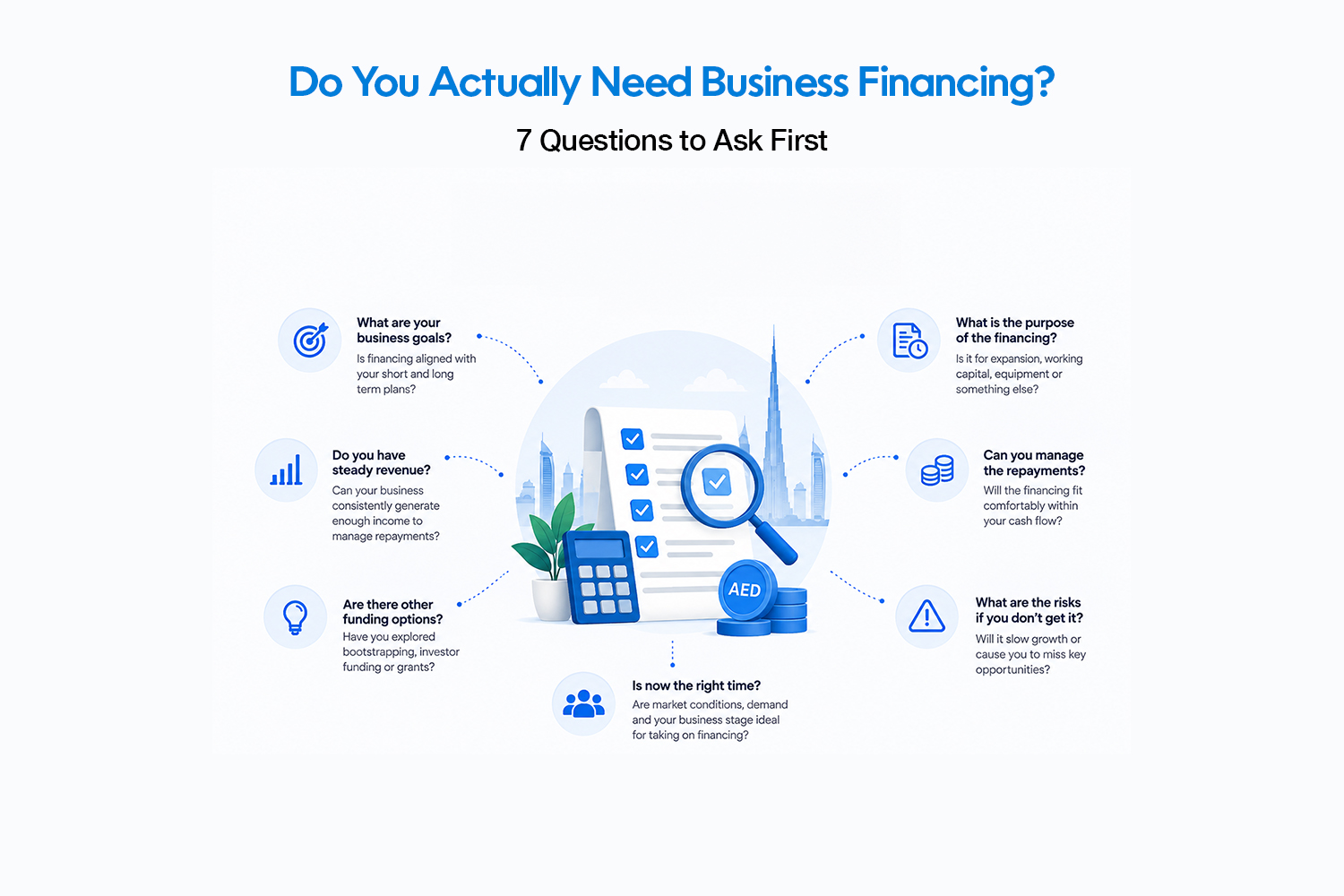
    For UAE SMEs, the answer depends on why you need the money, how quickly you need it and whether the funding will create enough business value to justify its cost. Before applying for business financing in the UAE, ask yourself these seven questions. 

    1. What exactly do I need the money for? 

    Start with the problem, not the financial product. Are you short of cash because: 

    • Customers are taking 60 or 90 days to pay? 
    • You need to purchase inventory before a busy season? 
    • You have received a large purchase order? 
    • You want to increase marketing spend? 
    • You need to cover a temporary working-capital gap? 
    • You are expanding into a new market? 
    • Your business is consistently spending more than it earns? 

    These are very different situations. For example, a business waiting for customers to pay may need invoice discounting, while an e-commerce business with consistent revenue may consider revenue-based liquidity. The right business financing solution starts by identifying the reason behind the cash requirement. 

    2. Is the problem temporary or structural? 

    This may be the most important question on the list. If your business has a temporary cash-flow gap because customers pay later than you need to pay suppliers, financing could potentially bridge that timing difference. But if your business consistently loses money, financing may simply delay the underlying problem. 

    Before applying, look at your: 

    • Revenue 
    • Gross margins 
    • Operating expenses 
    • Customer payment cycles 
    • Supplier payment terms 
    • Monthly cash flow 

    If the business model is fundamentally healthy but cash arrives at the wrong time, financing can potentially be useful. If the business is structurally unprofitable, however, borrowing more money may not solve the problem. 

    3. Will the financing help me make or save money? 

    Don’t ask only, “How much funding can I get?” 

    Ask: “What will this money do for my business?” 

    Suppose you need AED 150,000 to purchase inventory for products that consistently sell out. If that inventory allows you to generate significantly more revenue, the financing could have a clear commercial purpose. The same applies to a marketing campaign, new customer acquisition opportunity or large confirmed order. On the other hand, using short-term financing to repeatedly cover an operating deficit requires much more careful consideration. A useful rule is: Financing should have a clear job to do. 

    4. Is my cash stuck in invoices? 

    Sometimes, you don’t actually need to borrow money, you need earlier access to money your business has already earned. Imagine your company has completed a AED 200,000 B2B sale and issued an invoice, but the customer will pay in 60 days. Your business may be profitable, but AED 200,000 is still tied up in receivables. This is where invoice discounting can become relevant Fincobox offers invoice discounting for eligible UAE businesses and states that businesses can access up to 90% of eligible invoice value, subject to assessment and applicable terms. Instead of waiting for the entire payment cycle, an eligible business can potentially unlock part of that receivable as working capital. 

    5. Do I need a traditional business loan? 

    Not necessarily. Traditional loans are only one of several business financing options available to UAE SMEs. 

    Depending on your situation, you may consider: 

    Your situation Potential financing option 
    Cash tied up in unpaid invoices Invoice discounting 
    Consistent revenue + growth opportunity Revenue-based liquidity 
    Large confirmed customer order Purchase order liquidity 
    Short-term operating cash gap Short-term working capital 

    Fincobox offers these types of liquidity solutions for eligible UAE SMEs. The important point is that these products are not interchangeable. Your financing choice should match the underlying business need. 

    6. Can my business comfortably support the financing? 

    Getting approved doesn’t automatically mean financing is affordable. Before accepting an offer, understand: 

    • Total financing cost 
    • Fees 
    • Repayment or settlement structure 
    • Financing period 
    • Expected cash inflows 
    • What happens if sales decline 
    • Your expected return from using the capital 

    You should be able to explain exactly how and when the financing will be settled. Fincobox states that every registered SME goes through a credit underwriting process before receiving a detailed offer containing the applicable terms and limits.  That assessment is important because the right amount of financing depends on the individual business not simply on what a company requests. 

    7. Am I financing growth or financing a problem? 

    This is the final reality check. Growth financing can make sense when you have a proven business model and a specific opportunity that requires additional working capital. 

    For example: 

    More inventory → more sales → more revenue. 

    Or: 

    Larger order → financing for fulfilment → completed order → customer payment. 

    But if the cycle looks more like: Losses → financing → more losses → more financing, then the issue is probably bigger than a temporary cash-flow gap. Financing should support a healthy business strategy, not replace one. 

    How Much Business Financing Do UAE SMEs Actually Need? 

    There is no universal amount. A small business may need AED 50,000 to bridge an inventory cycle, while another company may require several hundred thousand dirhams to fulfil a major order or expand. The right amount should be based on: Funding requirement + timing + repayment capacity + expected business return. This is particularly important because taking more financing than you need can increase your overall financing cost. 

    UAE SMEs Are Still Focused on Growth 

    The demand for funding is closely connected to the growth ambitions of UAE businesses. According to Mastercard’s 2026 SME Confidence Index, 83% of UAE SMEs surveyed reported revenue growth over the previous 12 months, while 50% said they were seeking access to credit to support growth. (Mastercard

    The takeaway is important: financing isn’t necessarily about keeping a struggling business alive. For many SMEs, access to capital is also about having the resources to pursue growth opportunities. 

    Where Does Fincobox Fit In? 

    Fincobox provides non-dilutive liquidity solutions for eligible UAE SMEs, including invoice discounting, revenue-based liquidity, short-term working capital and purchase order liquidity.  The advantage of approaching financing this way is that you can start with your business problem. 

    Unpaid invoice? Explore invoice discounting. 

    Consistent revenue and a growth opportunity? Consider revenue-based liquidity. 

    Large customer order? Look at purchase order liquidity. 

    Temporary operating gap? Short-term working capital may be more relevant. 

    Fincobox also states that its liquidity is non-dilutive, meaning businesses retain ownership and control rather than giving up equity for funding.  

    So, Do You Actually Need Business Financing? 

    Before you apply, ask yourself these seven questions: 

    1. What exactly do I need the money for? 
    1. Is my cash-flow problem temporary or structural? 
    1. Will the financing help me make or save money? 
    1. Is my cash already tied up in invoices? 
    1. Do I really need a traditional business loan? 
    1. Can my business comfortably support the financing? 
    1. Am I financing growth or financing a problem? 

    If you have clear answers, you are in a much stronger position to decide whether financing makes sense and which type may fit your business. For UAE SMEs, the goal shouldn’t simply be to get business financing. It should be to get the right financing for the right business need at the right time. And if your business has a specific working-capital or growth requirement, Fincobox gives eligible UAE SMEs multiple liquidity options to explore based on their circumstances. 

    Frequently Asked Questions 

    1. When does a business actually need financing? 

    A business may need financing when it has a temporary working-capital gap, an opportunity for profitable growth, unpaid invoices tying up cash, inventory requirements or a large order that requires upfront expenditure. 

    2. Is business financing the same as a business loan? 

    No. A traditional business loan is only one type of business financing. SMEs can also explore solutions such as invoice discounting, revenue-based liquidity, purchase order financing and other working-capital facilities. 

    3. What is the best business financing option for an SME in the UAE? 

    There is no single best option. It depends on why the business needs capital. For example, invoice discounting may suit a company waiting for customer payments, while revenue-based liquidity may be relevant to a business with consistent revenue and a growth opportunity. 

    4. Can I get business financing without giving up equity? 

    Some financing structures are non-dilutive, meaning the business does not have to sell ownership to receive capital. Fincobox states that its liquidity solutions are 100% non-dilutive.  

    5. How much business financing should I apply for? 

    You should generally base the amount on your specific funding requirement, expected cash inflows, repayment capacity and the commercial return you expect from using the capital. Avoid taking more financing than your business can reasonably deploy and support. 

    6. Does Fincobox offer different business financing solutions? 

    Yes. Fincobox offers invoice discounting, revenue-based liquidity, short-term working capital and purchase order liquidity for eligible UAE SMEs.  

    7. Is Fincobox business financing available to UAE SMEs? 

    Fincobox is a UAE-focused digital platform offering non-dilutive working-capital solutions to SMEs. Its stated eligibility criteria include MSMEs, D2C and e-commerce businesses with 6+ months of operating history and AED 100,000+ in monthly revenue, subject to assessment. (Fincobox

    8. What should I check before accepting business financing? 

    Review the total cost, fees, repayment or settlement structure, financing period, cash-flow impact and your expected return from using the funds. You should also make sure the financing actually addresses the underlying business need. 

  • How to Get Started with Revenue Based Financing with Fincobox?

    How to Get Started with Revenue Based Financing with Fincobox?

    Your business is growing. Sales are coming in, customers are buying, and new opportunities are emerging. But growth often requires cash before it generates more cash. You may need to purchase inventory, increase your marketing budget, launch a new product, or expand operations. Waiting for future sales to arrive could mean missing the opportunity today. This is where Revenue Based Financing (RBF) can be worth exploring. For UAE SMEs with established revenue, Revenue Based Financing provides a way to access capital without giving up ownership of the business. Instead of relying solely on a traditional loan structure, the financing is designed around the business’s revenue and sales performance. 

    What Is Revenue Based Financing? 

    Revenue Based Financing is a form of business financing where a company receives capital upfront and repays it through an agreed structure linked to future revenue. 

    The concept is straightforward: 

    Get capital today → use it to grow → repay through future business revenue This approach can be relevant for businesses with consistent sales that need working capital for a specific growth opportunity. For example, imagine an e-commerce business generating AED 200,000 in monthly revenue but needing additional capital to purchase inventory ahead of a high-demand period. Revenue Based Financing may help bridge that working-capital gap without requiring the founders to sell equity in the company. 

    Why Are UAE Businesses Exploring Alternative Financing? 

    Access to capital remains an important consideration for UAE SMEs. According to Mastercard’s 2026 SME Confidence Index, half of the UAE SMEs surveyed said they are seeking access to credit to support growth, while 37% of business decision-makers identified easier access to funding and financial support as a priority. The takeaway is important: businesses may seek financing not only when they are struggling, but also when they want to invest in growth opportunities. Revenue Based Financing is one option for businesses that already have the revenue profile needed to support this type of facility. 

    How Does Revenue Based Financing Work? 

    Revenue Based Financing can be understood in four simple stages. 

    1. Your Business Generates Revenue 

    Revenue Based Financing is generally designed for businesses with an established revenue stream. Your sales history helps the financing provider assess business performance and repayment capacity. 

    2. You Apply for Funding 

    You provide relevant business and financial information for assessment. This may include: 

    • Monthly revenue 
    • Business operations 
    • Company registration 
    • Business-owner information 
    • Sales channels 
    • Financial performance 

    The exact requirements vary by provider. 

    3. You Receive a Financing Offer 

    After reviewing your business information, the provider determines whether you qualify and, if so, the financing amount and terms available to you. At Fincobox, registered SMEs undergo a credit underwriting process before receiving an offer with the applicable terms and limits. 

    4. Repayment Follows the Financing Structure 

    Revenue-based structures connect repayment to the business’s revenue or sales flows, depending on the facility. For online merchants, Fincobox states that repayments happen automatically through sales and settlement flows. 

    How to Get Started with Revenue Based Financing with Fincobox 

    If you are considering Revenue Based Financing UAE, the process starts with understanding your funding requirement and whether your business fits the financing criteria. 

    Step 1: Identify Why You Need the Capital 

    Start with the business problem, not the funding amount. 

    You may need capital for: 

    Inventory: Purchase additional stock ahead of increased demand. 

    Marketing: Increase customer acquisition spending when you have a clear opportunity to grow sales. 

    Product expansion: Launch a new product or expand your existing range. 

    Business growth: Increase capacity, reach new customers, or enter new markets. 

    Having a clear use for the capital can help you determine whether Revenue Based Financing is appropriate. 

    Step 2: Review Your Revenue 

    Revenue is central to this type of financing. 

    Look at your recent sales and consider: 

    • Is your revenue relatively consistent? 
    • Are your sales growing? 
    • Do you have predictable settlement cycles? 
    • Can the additional capital generate enough value to justify its cost? 

    Understanding your cash flow can help you make a more informed financing decision. 

    Step 3: Check Your Eligibility 

    Fincobox states that MSMEs, D2C and e-commerce businesses with 6+ months of operating history and AED 100,000+ in monthly revenue typically qualify, subject to assessment. 

    These criteria provide a useful starting point, but meeting them does not guarantee approval or a specific funding amount. Fincobox assesses each business before making an offer. 

    Step 4: Prepare Your Business Information 

    Fincobox states that applicants need basic documents related to: 

    • Business-owner KYC 
    • Company registration 
    • Business operational data 

    Preparing these details in advance can help keep the application process straightforward. 

    Step 5: Apply Through Fincobox 

    Once your information is ready, you can register and submit your application through Fincobox. The platform evaluates your business performance and determines the financing terms and limits available to you. Fincobox describes its liquidity solutions as 100% non-dilutive, meaning businesses do not have to give up equity or ownership to access the facility. 

    Step 6: Review the Offer Carefully 

    Receiving an offer is only part of the decision. 

    Before accepting any financing facility, consider: 

    • Total cost of financing 
    • Processing fees 
    • Repayment structure 
    • Financing period 
    • Available amount 
    • Expected revenue 
    • Intended use of funds 

    The objective is not simply to secure capital. It is to choose financing that fits your business’s cash flow and growth plans. 

    How Much Revenue Based Financing Can You Get With Fincobox? 

    The amount available depends on your business and its financial profile. Fincobox states that businesses using its Revenue Based Liquidity can access capital of up to 2.5–3 times their monthly revenue, with repayment terms that can vary between 6 and 9 months. These figures are subject to credit assessment and the applicable terms of the facility. For example, a business generating AED 200,000 in monthly revenue may be assessed for a larger facility than a business generating AED 50,000. However, the revenue multiple should not be treated as a guaranteed funding amount. The final facility depends on the individual business assessment and the terms offered. 

    What Can You Use Revenue Based Financing For? 

    Revenue Based Financing can be useful when capital is needed to support activities that are expected to contribute to future business revenue. 

    Common applications include: 

    Inventory 

    Purchase additional stock before a high-demand period instead of waiting for cash reserves to build. 

    Marketing 

    Increase marketing investment when there is a clear opportunity to acquire more customers and generate additional sales. 

    Product Expansion 

    Launch new products or expand an existing product range. 

    Business Growth 

    Fund initiatives that help increase capacity, reach new customers, or enter new markets. Fincobox specifically positions its Revenue Based Liquidity for businesses with consistent online sales that need funding for marketing, product expansion, or inventory needs

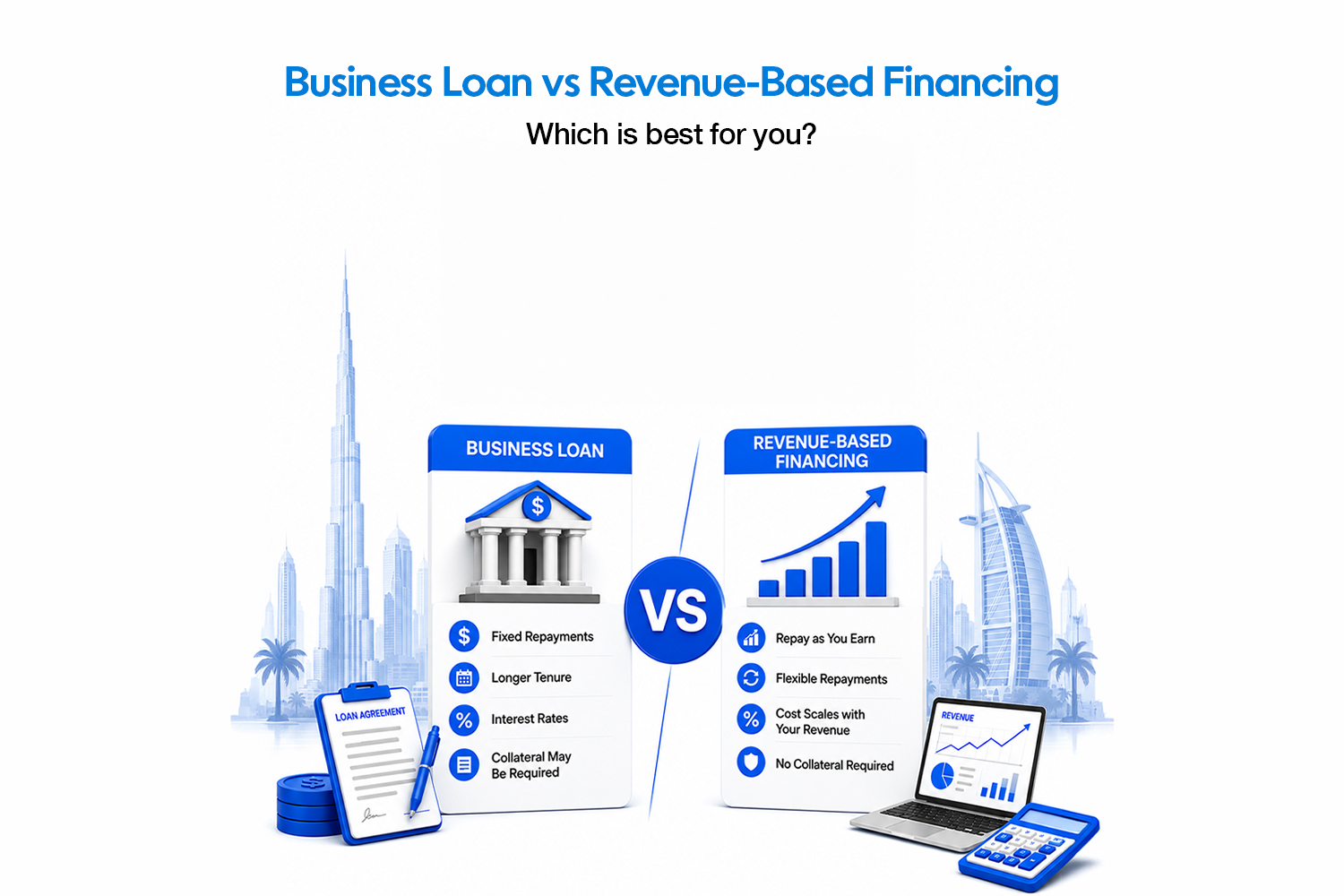
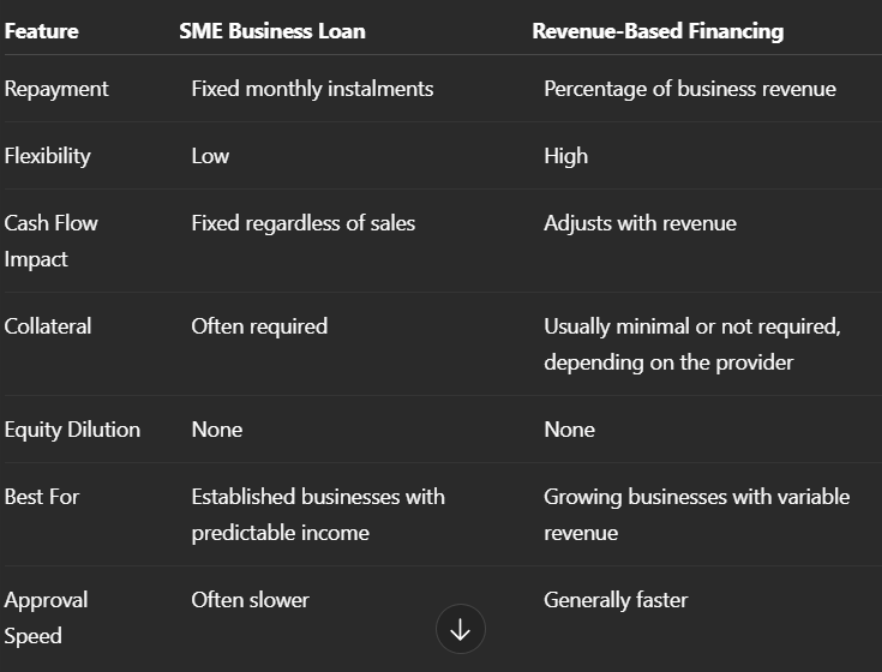
    Revenue Based Financing vs Traditional Business Loans 

    The key difference is how the financing is structured. A traditional business loan typically comes with a predetermined repayment schedule. Revenue Based Financing, by comparison, is structured around the business’s revenue or sales performance, depending on the facility. 

    Neither option is automatically better. The right choice depends on factors such as: 

    • Revenue consistency 
    • Growth plans 
    • Funding requirement 
    • Cash-flow cycle 
    • Financing cost 
    • Repayment capacity 

    Businesses should compare the total cost and obligations of each option before making a decision. 

    Why Consider Fincobox for Revenue Based Financing in the UAE? 

    Fincobox is a digital platform offering non-dilutive liquidity solutions for UAE SMEs. Its current product range includes: 

    • Revenue Based Liquidity 
    • Invoice Discounting 
    • Short-Term Forfaiting Arrangements 
    • Purchase Order Liquidity 

    Each solution addresses a different working-capital requirement. For example, a business with unpaid invoices may consider invoice discounting, while a business with consistent online revenue that needs capital for inventory or marketing may consider Revenue Based Liquidity. The important point is to identify the underlying cash-flow need first and then evaluate the financing solution that fits it. 

    Is Revenue Based Financing Right for Your Business? 

    Revenue Based Financing may be worth considering if your business: 

    • Has established and relatively consistent revenue 
    • Has been operating for at least the required period 
    • Has a clear growth opportunity 
    • Needs working capital for growth 
    • Wants to avoid equity dilution 
    • Can comfortably manage the applicable repayment structure 

    It may not be suitable for every business. If your company is pre-revenue, has highly unpredictable sales, or does not have a clear use for the capital, another financing option may be more appropriate. 

    The key question is not simply: 

    “Can I get funding?” 

    It is: 

    “Will this funding help my business create enough value to justify its cost?” 

    Final Takeaway 

    For a growing UAE business, waiting for future revenue can sometimes mean waiting too long to act on a valuable opportunity. Revenue Based Financing provides an alternative way for eligible businesses to access capital while retaining ownership. With Fincobox, eligible UAE SMEs can explore Revenue Based Liquidity based on their monthly revenue, with financing positioned for needs such as inventory, marketing, and product expansion. If your business has established revenue and a clear growth opportunity, Revenue Based Financing could be worth considering as part of your broader SME financing strategy in the UAE

    Frequently Asked Questions 

    1. What is Revenue Based Financing in the UAE? 

    Revenue Based Financing is a business financing model where capital is provided upfront and repayment is structured around the business’s future revenue or sales, depending on the facility. 

    2. Who is eligible for Revenue Based Financing with Fincobox? 

    Fincobox states that MSMEs, D2C and e-commerce businesses with 6+ months of operating history and AED 100,000+ in monthly revenue typically qualify, subject to assessment. 

    3. How much can I get through Fincobox Revenue Based Liquidity? 

    Fincobox states that businesses can access capital of up to 2.5–3 times their monthly revenue, subject to credit assessment and applicable terms. Repayment terms can vary between 6 and 9 months

    4. Do I have to give up equity with Revenue Based Financing? 

    Fincobox states that its liquidity is 100% non-dilutive, meaning businesses do not give up equity or ownership to access the facility. 

    5. What can I use Revenue Based Financing for? 

    Fincobox specifically positions its Revenue Based Liquidity for businesses with consistent online sales that need funding for areas such as marketing, inventory, and product expansion

    6. How long does Fincobox Revenue Based Financing take? 

    Fincobox states that its verification process can take 1–2 business days after the required information is submitted. Once the facility is activated, Fincobox says most qualifying businesses receive funds within 7 days of their fund request. Timing can vary depending on the process and applicable terms. 

    7. Is Revenue Based Financing better than a traditional business loan? 

    Not necessarily. The right option depends on your business model, revenue consistency, funding purpose, financing cost, and repayment capacity. 

    8. Can I apply for more than one Fincobox financing solution? 

    Yes. Fincobox states that businesses can apply for both Revenue Based Liquidity and Invoice Discounting simultaneously, allowing different facilities to address different working-capital requirements. 

  • What Documents Do You Need for Invoice Financing?

    What Documents Do You Need for Invoice Financing?

    If your business has completed a sale but your customer has not paid yet, the money may be sitting in your accounts receivable instead of being available for day-to-day use.  Invoice financing can help eligible businesses access working capital against outstanding invoices rather than waiting for the full payment cycle. 

    But what documents do you need to apply? For UAE SMEs considering an invoice discounting solution in the UAE, having the right documents ready can make the assessment process more straightforward and help a financing provider understand your business, customer and underlying transaction. 

    What Is Invoice Financing? 

    Invoice financing is a working capital solution that allows a business to access funds against eligible unpaid invoices.  Instead of waiting 30, 60 or 90 days for a customer to pay, an approved business may receive an advance against the invoice. The facility is then settled according to the agreed terms when the customer payment is received. For UAE SMEs, this can be useful when sales are healthy but cash flow is temporarily tied up in receivables. 

    The advance percentage, fees, repayment structure and eligibility criteria vary by provider and business. 

    What Documents Are Needed for Invoice Financing? 

    The exact requirements depend on the financing provider, your business and the invoices being financed. However, businesses should generally be prepared to provide the following. 

    1. The Invoice You Want to Finance 

    The invoice is one of the most important documents in the application. 

    It should clearly show: 

    • Your business name and details 
    • Customer or buyer details 
    • Invoice number 
    • Invoice amount 
    • Issue date 
    • Payment due date 
    • Agreed payment terms 
    • Description of the goods or services provided 

    The provider uses this information to assess the receivable and determine whether the invoice is eligible for financing. 

    2. Valid UAE Trade Licence 

    A valid UAE trade licence is commonly required to verify that your business is legally registered and operating. 

    Depending on the provider and company structure, you may also need additional corporate documents, such as your Memorandum of Association or other registration records. 

    3. Recent Business Bank Statements 

    Bank statements give the financing provider visibility into your company’s financial activity and cash flow. 

    You may be asked for several months of corporate bank statements. The exact period varies by provider. For example, Kema’s guidance for UAE SMBs refers to 6–12 months of bank statements as a common requirement. 

    These statements can help providers understand your business activity, incoming payments and overall financial position. 

    4. Purchase Orders, Contracts or Commercial Agreements 

    Supporting documents can help establish the relationship between your business and the customer. 

    Depending on the transaction, these may include: 

    • Purchase orders 
    • Sales contracts 
    • Work orders 
    • Service agreements 
    • Other commercial agreements 

    For example, if your company supplied goods under a purchase order, the PO can help demonstrate what the invoice relates to and support its validity. 

    5. Proof of Delivery or Service Completion 

    Providers may also require evidence that the goods or services linked to the invoice have actually been delivered or completed. 

    This could include: 

    • Delivery notes 
    • Goods received notes 
    • Completion certificates 
    • Service confirmations 
    • Shipping documents 
    • Other proof of fulfilment 

    This documentation is particularly useful because it connects the invoice to a completed commercial transaction. 

    6. Company and KYC Documents 

    You may also need documents that verify the company, its owners and authorised representatives. 

    These can include: 

    • Memorandum of Association (MOA) 
    • Articles of Association, where applicable 
    • Passport copies 
    • Emirates IDs 
    • Shareholder information 
    • Details of authorised signatories 
    • Other KYC or compliance documents 

    The exact requirements depend on the provider and your company’s legal structure. 

    Does Every Invoice Qualify for Invoice Financing? 

    No. Having an unpaid invoice does not automatically mean it can be financed. 

    Providers may assess: 

    • The business issuing the invoice 
    • The customer who owes the money 
    • Invoice value 
    • Payment terms 
    • Whether the goods or services have been delivered 
    • Whether the invoice is disputed 
    • Supporting transaction documents 
    • The overall financial profile of the business 

    In general, clear, verifiable invoices supported by proper commercial documentation are easier to assess. 

    Why Does Documentation Matter? 

    Good documentation helps a provider answer three basic questions: 

    1. Is the business legitimate and financially active? 

    Your trade licence, company documents and bank statements help establish this. 

    2. Is the customer and receivable credible? 

    The invoice, payment terms and customer information provide context around the money owed. 

    3. Did the underlying transaction actually take place? 

    Purchase orders, contracts and delivery or completion evidence help establish this. Preparing these documents in advance can reduce unnecessary back-and-forth and make the application process more efficient. 

    How Fincobox Can Help UAE SMEs 

    For businesses with cash tied up in outstanding invoices, the benefit of invoice discounting is simple: you can potentially access working capital before your customer pays. Fincobox provides digital-first liquidity solutions for UAE businesses, including Invoice Discounting. Its website states that eligible businesses can access up to 90% of invoice value within 24 hours, subject to assessment and applicable terms. Fincobox also states that its liquidity solutions require no collateral

    For an SME, access to that liquidity can help with practical needs such as: 

    • Paying suppliers on time 
    • Managing payroll and operating expenses 
    • Replenishing inventory 
    • Fulfilling new orders 
    • Taking advantage of growth opportunities 
    • Bridging short-term cash-flow gaps 

    Instead of allowing an outstanding invoice to keep working capital locked up, businesses can potentially put that receivable to work sooner. Fincobox also uses a digital-first process, helping businesses submit information and documents for assessment without relying on a lengthy traditional financing process. 

    As with any financing facility, the amount available, approval and terms depend on the business, invoice and assessment. 

    A Simple Invoice Financing Document Checklist 

    Before applying, it can help to have these documents ready: 

    • ✅ Valid UAE trade licence 
    • ✅ Invoice or invoices you want to finance 
    • ✅ Recent corporate bank statements 
    • ✅ Purchase order or customer contract, where applicable 
    • ✅ Proof of delivery or service completion 
    • ✅ Company registration documents 
    • ✅ Identification documents for relevant owners or authorised signatories 
    • ✅ Any additional customer or transaction information requested by the provider 

    The better organised your records are, the easier it can be for a provider to understand the business and the receivables being financed. 

    Final Thoughts 

    Invoice financing can help UAE SMEs access working capital tied up in eligible outstanding invoices instead of waiting for the full customer payment cycle. While requirements vary between providers, businesses should generally be prepared with their trade licence, invoices, bank statements and supporting transaction documents.  If your business regularly waits weeks or months for customers to pay, an invoice discounting solution in the UAE could be worth exploring as part of your working capital strategy.  Fincobox offers invoice discounting and other invoice financing solutions designed to help eligible UAE businesses improve liquidity and manage cash-flow gaps. Its current website states that businesses may access up to 90% of eligible invoice value within 24 hours, with no collateral required, subject to assessment and applicable terms. 

    Frequently Asked Questions 

    1. What documents are required for invoice financing? 

    Common documents include a valid UAE trade licence, invoices to be financed, recent business bank statements, purchase orders or contracts, proof of delivery or service completion, and company or KYC documents. Requirements vary by provider. 

    2. Do I need a trade licence for invoice financing in the UAE? 

    Typically, UAE businesses need to provide valid company registration or trade licence documentation as part of the verification process. Specific eligibility requirements depend on the financing provider. 

    3. Can I finance an unpaid invoice? 

    Potentially, yes. Eligible unpaid invoices can be considered for invoice financing, subject to assessment of the business, customer, transaction and invoice terms. 

    4. Is invoice financing the same as invoice discounting? 

    Invoice financing is a broader term for solutions that provide funding against outstanding receivables. Invoice discounting is one type of invoice financing arrangement. The exact structure, fees and repayment terms depend on the provider. 

    5. How much of an invoice can I finance with Fincobox? 

    Fincobox states that eligible businesses can access up to 90% of invoice value, subject to assessment and applicable terms. 

    6. How quickly can I receive invoice financing? 

    The timeline depends on the provider, documentation and assessment. Fincobox currently states that eligible businesses can access up to 90% of invoice value within 24 hours, subject to applicable terms. 

    7. Who can use invoice financing in the UAE? 

    Invoice financing may be relevant to businesses that issue invoices on credit terms and have eligible outstanding receivables. SMEs, traders, wholesalers, manufacturers and B2B service businesses may find it useful, subject to provider-specific eligibility criteria. 

  • Can Invoice Financing Help Businesses Accept Larger Orders?

    Can Invoice Financing Help Businesses Accept Larger Orders?

    Yes, but there is an important timing distinction. Invoice financing can help a business after an eligible sale has been completed and an invoice exists. It does not automatically provide the cash needed to fulfil an order before delivery. That difference is critical for SMEs planning to accept larger contracts. 

    The Large-Order Cash Gap 

    Imagine a UAE distributor wins a AED 500,000 customer order. 

    To fulfil it, the distributor needs: 

    • AED 220,000 for inventory 
    • AED 40,000 for logistics 
    • AED 25,000 for temporary labour 

    The customer will pay 60 days after delivery. The business has two different financing needs at two different points: 

    Before delivery: It needs cash to fulfil the order. 

    After invoicing: It may need cash while waiting for the customer to pay. 

    Invoice financing is generally relevant to the second stage. 

    When Invoice Financing Can Help Growth 

    Once the business has delivered and issued an eligible invoice, financing against that receivable may free up cash that can support the next order. 

    For example: 

    1. Order A is delivered. 
    1. The customer receives an invoice with 60-day terms. 
    1. Cash from Order A is still unavailable. 
    1. Order B arrives and requires new inventory. 
    1. Liquidity against an eligible invoice may help the business avoid waiting until day 60 before funding its next operating cycle. 

    This is how invoice financing can support a sequence of larger orders: by reducing the time cash remains locked in receivables. 

    When Invoice Financing Is the Wrong Tool 

    If the business has only a purchase order and has not yet delivered the goods or services, there may be no invoice available to finance. In that case, purchase-order-related funding may be more relevant. 

    Similarly, invoice financing may not solve the problem if: 

    • The order itself has very low margins. 
    • The customer is likely to dispute or delay payment. 
    • The invoice is not eligible. 
    • The cost of financing outweighs the profit from taking the next order. 
    • The business has a long-term capital shortage rather than a short receivables gap. 

    Invoice Financing vs Purchase Order Funding 

    Business stage Potential financing need 
    Purchase order received, goods not yet delivered Purchase-order-related funding may be relevant 
    Goods/services delivered, invoice issued Invoice financing may be relevant 
    Business has consistent revenue and needs growth capital Revenue-based liquidity may be worth evaluating 
    General temporary operating gap Short-term working capital may be relevant 

    The best option depends on where the business is in the sales cycle

    A Practical Order-Acceptance Checklist 

    Before accepting a large order, calculate: 

    1. Total upfront cash required. 
    1. Gross profit expected from the order. 
    1. Date suppliers must be paid. 
    1. Date the customer is expected to pay. 
    1. Existing cash available. 
    1. Financing cost for the gap period. 
    1. A contingency if the customer pays late. 

    For example, a AED 500,000 order is not automatically a good growth opportunity. If it requires AED 400,000 upfront, produces a very thin margin and payment is uncertain, financing may increase risk rather than reduce it. 

    Where Fincobox Can Be Relevant 

    Fincobox offers Invoice Discounting for eligible UAE SMEs and states that eligible businesses may access up to 90% of invoice value, subject to assessment and applicable terms. The platform also offers Purchase Order Liquidity, Revenue-Based Liquidity and Short-Term Working Capital. The appropriate option depends on whether the business needs cash before fulfilment, after invoicing, against revenue or for a broader short-term operating requirement. 

    Final Thoughts 

    Invoice financing can help businesses accept larger orders indirectly by improving the cash conversion cycle after sales have been invoiced. The most important decision is timing: Do you need cash to fulfil the current order, or do you need to unlock cash from a completed sale to fund the next one? Those are different problems and may require different financing structures. 

    Frequently Asked Questions 

    1. Can I use invoice financing before delivering an order? 

    Generally, invoice financing is linked to an eligible invoice, so it is typically relevant after the sale has progressed to the invoicing stage. If you need funding before fulfilment, explore whether purchase-order-related financing is available. 

    2. How much of an invoice can be financed? 

    The advance percentage depends on the provider and assessment. Fincobox states that eligible businesses may access up to 90% of eligible invoice value, subject to applicable terms. 

    3. What happens if the customer pays late? 

    The consequences depend on the facility agreement. Ask about extended fees, settlement obligations and the process for late or disputed invoices before accepting financing. 

    4. What documents might I need? 

    Providers may request company information, financial records, the invoice, customer details and supporting evidence relating to the underlying sale or delivery. 

    5. How do I know whether the financing cost is worth it? 

    Compare the total cost of financing with the additional profit or commercial benefit created by accepting or accelerating the next order. If financing merely allows the business to take low-margin or high-risk work, it may not improve the overall financial position. 

  • How Fincobox is Changing SME Financing in the UAE

    How Fincobox is Changing SME Financing in the UAE

    The most useful change in SME financing is not simply “more funding.” It is better matching between the reason a business needs cash and the way the financing is structured

    A UAE SME can face very different funding problems: 

    • A distributor has delivered goods but will not be paid for 60 days. 
    • An e-commerce brand has steady sales but needs inventory before a seasonal peak. 
    • A manufacturer has received a large order but needs cash before production begins. 
    • A services company has a temporary gap between payroll and expected customer receipts. 

    Treating all four situations as the same “working capital problem” can lead to the wrong financing choice. 

    From Borrowing Amount to Cash-Flow Fit 

    Traditional finance often begins with a broad question: How much can the business borrow? 

    A more practical SME financing question is: What exactly is creating the cash gap? 

    That shift changes the conversation from product-first financing to use-case-first financing. 

    For example: 

    Completed sale + unpaid invoice → Receivables-based finance may be relevant 

    Consistent revenue + growth spend → Revenue-linked liquidity may be relevant 

    Confirmed order + upfront fulfilment costs → Purchase-order-related liquidity may be relevant 

    Temporary operating gap → Short-term working capital may be relevant 

    Why Digital Assessment Matters 

    For SMEs, timing can be commercially important. A business may not need capital for five years. It may need liquidity for 45 days because a supplier discount expires this week while a major customer pays next month. Digital-first financing models aim to make information sharing and assessment more streamlined. However, speed should never replace due diligence. Businesses still need to understand: 

    • Total financing cost 
    • Repayment or settlement mechanics 
    • Eligibility criteria 
    • Required documentation 
    • What happens if revenue or customer payment is delayed 
    • Whether the facility matches the actual cash cycle 

    Four UAE SME Scenarios 

    1. The Trading Company 

    A trader has AED 300,000 in eligible invoices but must pay suppliers in 20 days. The financing need is linked to completed sales and delayed collection. 

    2. The Online Brand 

    An e-commerce business sees predictable monthly revenue but needs capital for inventory and marketing before a high-demand period. The financing requirement is tied more closely to revenue performance and growth expenditure. 

    3. The Manufacturer 

    A manufacturer receives a major purchase order but needs to buy materials before production and delivery. An invoice does not yet exist, so invoice financing would not address the immediate problem. 

    4. The Professional Services SME 

    A consultancy has a short-term cash gap caused by payroll timing and delayed project receipts. The business first needs to determine whether the gap is temporary or a recurring sign of weak cash management. 

    Where Fincobox Fits Into This Model 

    Fincobox offers digital-first, non-dilutive liquidity solutions for eligible UAE SMEs across four main use cases: Invoice Discounting, Revenue-Based Liquidity, Short-Term Working Capital and Purchase Order Liquidity. The distinction matters because the products should not be presented as interchangeable. A business should first identify its financing trigger and then evaluate the relevant option, including cost, eligibility and repayment obligations. For eligible invoice discounting customers, Fincobox states that businesses may access up to 90% of eligible invoice value, subject to assessment and applicable terms. 

    Who Should Be Careful Before Applying? 

    Financing may not be the right answer if: 

    • The business is experiencing persistent operating losses. 
    • Customer invoices are unlikely to be collected. 
    • Margins are too weak to absorb the financing cost. 
    • The funding need is long-term but the product is short-term. 
    • The company cannot clearly explain how and when the facility will be settled. 

    In these situations, restructuring costs, improving collections, renegotiating payment terms or changing the operating model may need to come first. 

    Final Thoughts 

    SME financing in the UAE is becoming more useful when it is connected to a real business event rather than treated as a generic source of cash. Fincobox’s role in this shift is its multi-product approach to liquidity. For eligible businesses, the aim is to evaluate whether the funding need comes from receivables, revenue, a purchase order or a short-term operating gap—and then assess the appropriate structure. 

    Frequently Asked Questions 

    1. What documents are commonly needed for SME financing? 

    Depending on the facility, businesses may need company documents, bank statements, financial information, revenue data, invoices, purchase orders and supporting transaction documents. 

    2. How long should an SME finance facility be used for? 

    The duration should match the underlying business need. Using short-term finance for a long-term structural funding problem can create repeated refinancing pressure. 

    3. How do I compare two financing offers? 

    Compare total cost, cash received, repayment or settlement timing, fees, eligibility conditions, consequences of late payment and any security or guarantee requirements.

    4. Is financing available to every UAE SME? 

    No. Eligibility depends on the provider and product, as well as factors such as business performance, revenue, customers, financial information and the underlying transaction. 

  • Revenue-Based Funding vs Non-Dilutive Funding: Are They the Same?

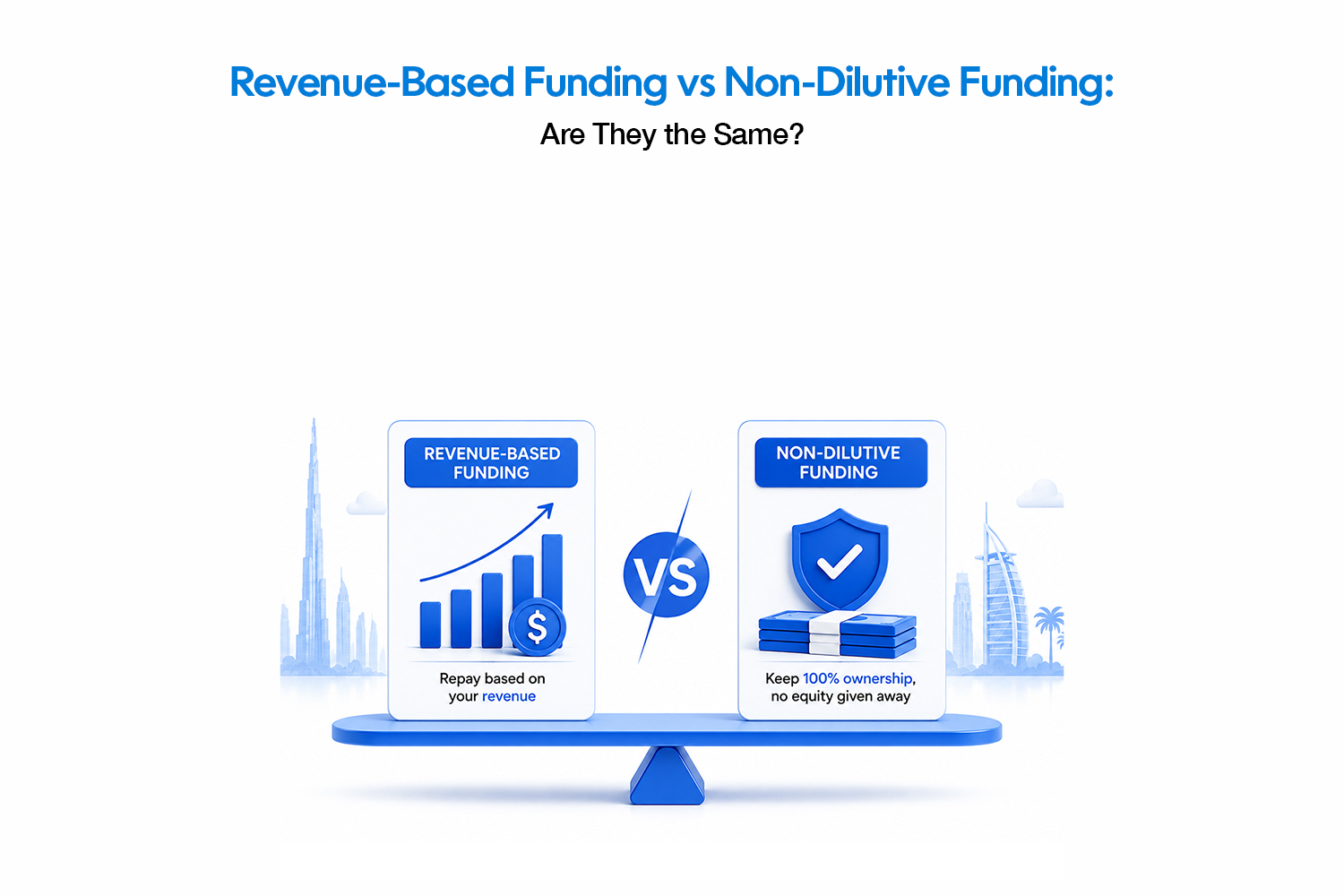
    Revenue-Based Funding vs Non-Dilutive Funding: Are They the Same?

    When a business needs capital to grow, founders have more choices than traditional bank loans or selling equity to investors. Two terms that frequently appear in the alternative financing space are revenue-based funding and non-dilutive funding

    But are they actually the same?  Not exactly. Revenue-based funding is one type of non-dilutive financing, but non-dilutive funding is a much broader category. Understanding the difference can help business owners choose a funding option that matches their revenue, growth plans, cash-flow requirements, and ownership priorities. 

    What Is Revenue-Based Funding? 

    Revenue-based funding, also known as revenue-based financing (RBF), is a financing model where a business receives capital upfront and repays it through an agreed portion of future revenue until the agreed repayment amount is reached. Unlike equity funding, the business does not give investors an ownership stake. 

    For example, a growing e-commerce business could receive funding to purchase inventory or increase its marketing spend. Instead of making a traditional fixed EMI payment, repayments may be linked to the business’s revenue or sales performance, depending on the structure of the facility. This can make revenue-based financing attractive to businesses with consistent and predictable revenue streams. 

    What Is Non-Dilutive Funding? 

    Non-dilutive funding is a broader term for financing that allows a business to raise capital without giving away ownership or equity. It can include several different forms of financing, such as: 

    • Revenue-based financing 
    • Invoice discounting 
    • Purchase order financing 
    • Certain short-term working capital solutions 
    • Grants and other non-equity funding, depending on the context 

    The defining characteristic is ownership preservation. When founders raise equity financing, they sell a percentage of their company to investors. With non-dilutive financing, the founder generally retains ownership, although the business still has to meet the obligations and costs associated with the specific financing arrangement. 

    Revenue-Based Funding vs Non-Dilutive Funding: The Key Difference 

    The simplest way to understand the relationship is: 

    Revenue-based funding is a financing method. Non-dilutive funding is a broader financing category. 

    Think of it this way: 

    Non-dilutive funding 

    ↓ 

    Revenue-based financing 

    Invoice discounting 

    Purchase order financing 

    Other non-equity funding solutions 

    So, while revenue-based financing can be non-dilutive, not every non-dilutive funding solution is revenue-based financing. 

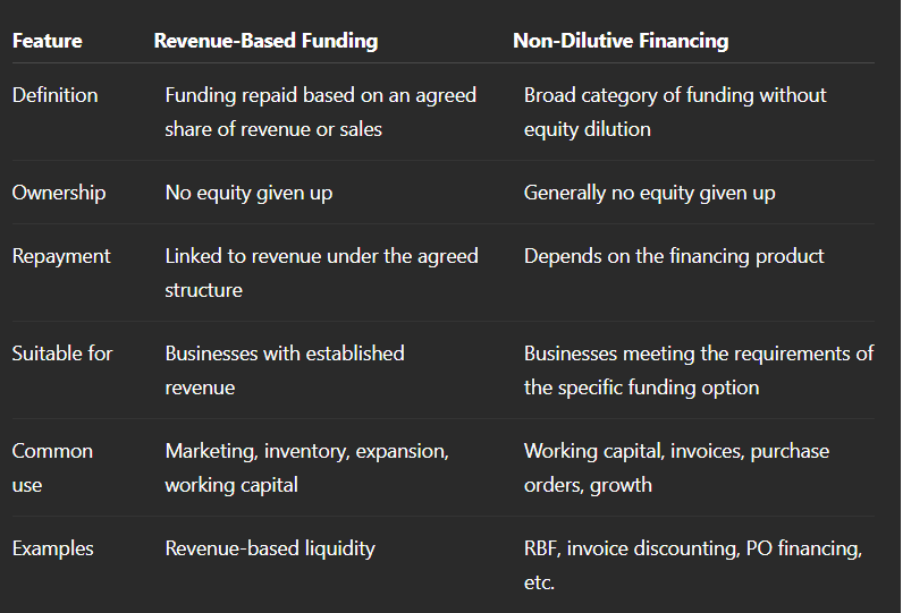
    Revenue-Based Funding vs Non-Dilutive Financing 

    The exact repayment mechanism, fees, eligibility, and structure can vary between providers, so businesses should always review the terms of a specific facility before proceeding. 

    Why Are Businesses Looking at Non-Dilutive Funding? 

    For many founders, ownership is one of the most important considerations when raising capital. Equity funding can provide significant capital and strategic support, but it also means giving investors a stake in the company. Non-dilutive financing provides another route: access to capital without automatically transferring ownership. This can be particularly relevant for established SMEs and growth-stage businesses that already generate revenue and need capital for a specific purpose. The trend toward alternative financing is also broader than a single financing model. The OECD’s 2026 Financing SMEs and Entrepreneurs report notes that fintech-driven finance and non-bank lenders are playing an increasing role in SME access to capital. (OECD

    When Does Revenue-Based Funding Make Sense? 

    Revenue-based funding may be worth considering when a business: 

    • Has consistent or recurring revenue 
    • Needs capital to accelerate growth 
    • Wants to avoid equity dilution 
    • Needs funding for inventory or marketing 
    • Has predictable sales patterns 
    • Wants a financing structure linked to business performance 

    For example, SaaS companies, e-commerce brands, D2C businesses, and other businesses with established revenue streams may find revenue-based financing relevant. However, it may not be appropriate for every business. Companies without meaningful revenue, businesses with highly unpredictable sales, or businesses requiring very long-term capital may need to consider other financing options. 

    When Should You Consider Other Non-Dilutive Funding? 

    Non-dilutive financing is not limited to revenue-generating models. A business with strong outstanding receivables may consider invoice discounting. A company that has received a large purchase order but needs funds to fulfil it may consider purchase order financing. This is why understanding the underlying cash-flow problem is more important than choosing a financing label. 

    Ask yourself: What is preventing my business from growing? Is it: 

    • Customers paying invoices late? 
    • Insufficient inventory? 
    • A large purchase order? 
    • A temporary cash-flow gap? 
    • Marketing or expansion requirements? 

    The answer can help determine which type of non-dilutive financing is most appropriate. 

    Revenue-Based Funding and Non-Dilutive Financing in the UAE 

    The UAE’s growing SME ecosystem has created demand for financing solutions that can support business growth while allowing founders to retain ownership. Fincobox provides digital-first liquidity solutions for UAE SMEs, including Revenue-Based Liquidity, Invoice Discounting, Short-Term Working Capital, and Purchase Order Liquidity.  For businesses with consistent online sales, Fincobox states that its Revenue-Based Liquidity solution can provide capital based on business revenue, with repayment terms that can vary according to the facility.  This makes it possible for businesses to consider financing based on their actual business model and liquidity requirements rather than relying on a single funding structure. 

    Which Is Better: Revenue-Based Funding or Non-Dilutive Funding? 

    The comparison isn’t really revenue-based funding vs non-dilutive funding, because one is a subset of the other. 

    The better question is: 

    Which type of non-dilutive financing is right for my business? 

    If your business has predictable revenue and needs growth capital, revenue-based funding may be worth exploring. If your cash is tied up in unpaid invoices, invoice discounting may be more relevant. If you’ve received a large customer order but need capital to fulfil it, purchase order liquidity may be a better fit. The right solution ultimately depends on your revenue model, cash-flow cycle, funding requirement, and eligibility. 

    How Fincobox Can Help 

    Fincobox offers several non-dilutive liquidity solutions designed around different SME financing requirements in the UAE. 

    Its solutions include: 

    • Revenue-Based Liquidity for businesses with consistent revenue 
    • Invoice Discounting to unlock liquidity against eligible invoices 
    • Purchase Order Liquidity to help businesses fulfil eligible orders 
    • Short-Term Working Capital for operational liquidity needs 

    Fincobox states that its solutions do not require businesses to give up equity and that its liquidity is based on business performance rather than personal assets or guarantees.  For businesses considering revenue-based financing or other forms of non-dilutive funding, the key is to identify the specific cash-flow requirement first and then evaluate the financing structure, cost, eligibility, and repayment terms. 

    Final Thoughts 

    So, are revenue-based funding and non-dilutive funding the same? No. Revenue-based funding is one form of non-dilutive financing. Non-dilutive funding is the broader category covering financing solutions that allow businesses to access capital without giving away equity. Revenue-based financing is one specific model where repayment is connected to business revenue under the agreed terms. For UAE SMEs, understanding this distinction can make it easier to evaluate financing options based on the actual business need—not simply the amount of capital required. Whether the requirement is growth capital, working capital, invoice liquidity, or purchase-order funding, businesses should compare the available options carefully and choose a structure that supports sustainable growth. 

    Frequently Asked Questions 

    1. Is revenue-based funding the same as non-dilutive funding? 

    No. Revenue-based funding is a type of non-dilutive financing. Non-dilutive funding is a broader category that includes multiple financing methods where the business does not give up equity. 

    2. Is revenue-based financing non-dilutive? 

    Generally, yes. Revenue-based financing does not require the business to sell an ownership stake in exchange for capital. However, the exact structure and terms depend on the financing provider. 

    3. What is the main benefit of non-dilutive funding? 

    The primary benefit is that founders can access capital without giving away ownership. This allows them to maintain greater control of their business while financing growth. 

    4. Who can benefit from revenue-based financing? 

    Revenue-based financing is generally more suitable for businesses with established and predictable revenue streams, including eligible SaaS, e-commerce, D2C, and other growth-stage businesses. 

    5. What are examples of non-dilutive financing? 

    Examples can include revenue-based financing, invoice discounting, purchase order financing, and certain working capital solutions. The availability and eligibility of each option depend on the provider and business. 

    6. Does Fincobox offer non-dilutive funding in the UAE? 

    Yes. Fincobox offers non-dilutive liquidity solutions for eligible UAE SMEs, including Revenue-Based Liquidity, Invoice Discounting, Purchase Order Liquidity, and Short-Term Working Capital.  

    7. How do I choose between revenue-based financing and invoice discounting? 

    Consider where your cash is tied up. If you have consistent revenue and need growth capital, revenue-based financing may be relevant. If your business has eligible unpaid invoices and needs liquidity before customers pay, invoice discounting may be more appropriate.

  • Invoice Discounting for Small Businesses: How Does It Work? 

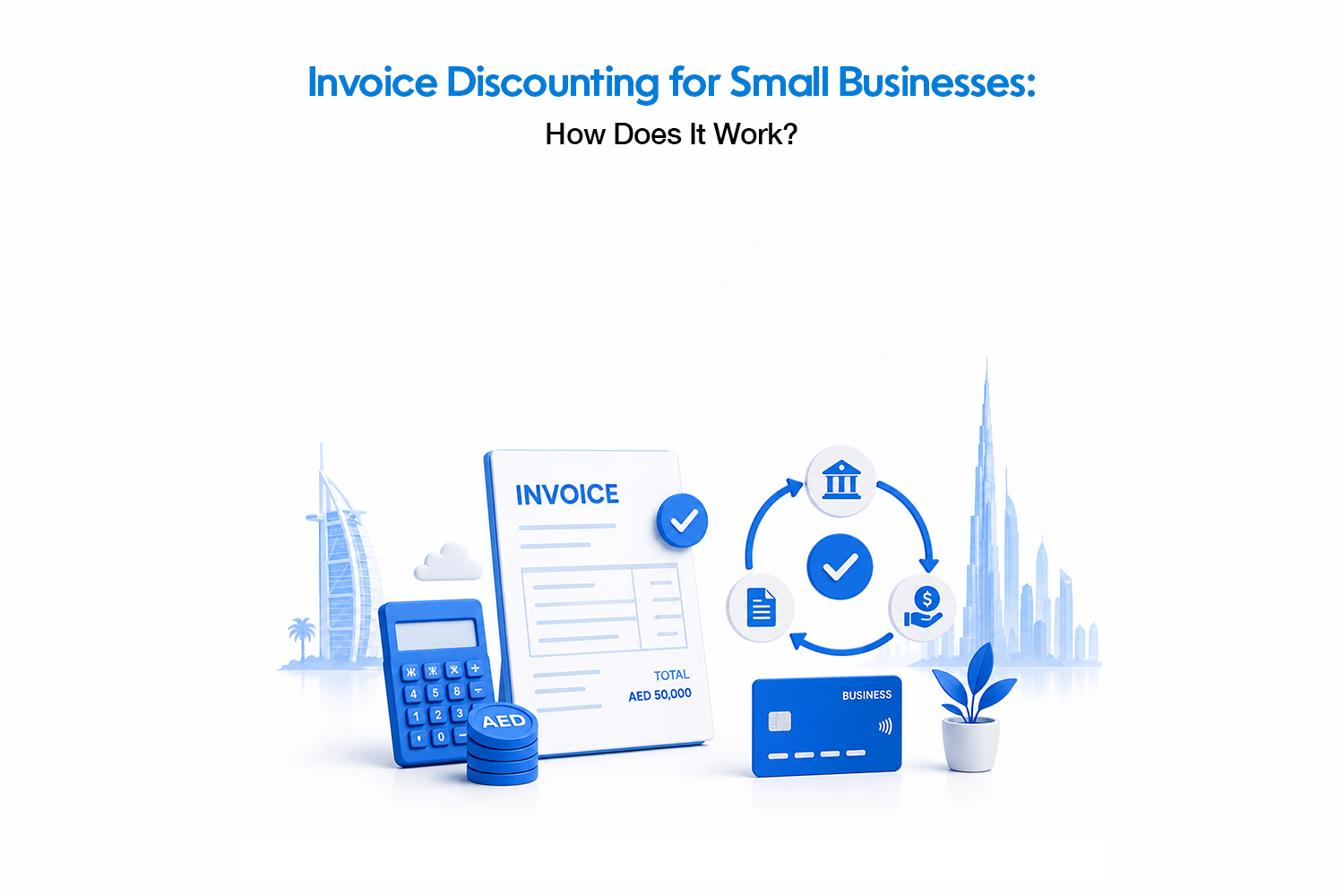
    Invoice Discounting for Small Businesses: How Does It Work? 

    For many small businesses, making sales is not the biggest challenge. Getting paid on time can be. A business may complete an order today but wait 30, 60 or 90 days for the customer to make payment. During that period, the business still needs to pay suppliers, employees, rent, marketing costs and other operating expenses. This gap between earning revenue and receiving cash can put pressure on working capital. This is where invoice discounting for small businesses can help. It allows eligible businesses to access a portion of the value of their outstanding invoices before their customers pay, helping them maintain liquidity without waiting for the full payment cycle. For UAE SMEs, invoice discounting can be particularly useful for businesses that regularly invoice customers on credit terms. 

    What Is Invoice Discounting? 

    Invoice discounting is a short-term working capital solution that allows a business to access funds against eligible unpaid invoices. Instead of waiting for a customer to pay an invoice at the end of its payment term, the business submits the invoice to a financing provider. The provider assesses the invoice and business and, if approved, advances a percentage of the invoice value. When the customer eventually pays the invoice, the remaining amount is settled after applicable fees and charges. 

    A simple example 

    Suppose your business raises an invoice worth AED 100,000 with a 60-day payment term. Instead of waiting two months for the full payment, an approved financing arrangement could provide access to a significant portion of the invoice value upfront. 

    The business can then use the available liquidity to: 

    • Pay suppliers 
    • Purchase inventory 
    • Manage payroll and operating expenses 
    • Accept new customer orders 
    • Invest in marketing 
    • Bridge temporary cash-flow gaps 

    This allows the business to put its receivables to work rather than leaving cash tied up until the customer pays. 

    How Does Invoice Discounting Work? 

    The process is generally straightforward: 

    1. Raise an invoice 

    Your business provides products or services to a customer and issues an eligible invoice with agreed payment terms. 

    2. Submit the invoice 

    The invoice and required business information are shared with the financing provider for assessment. 

    3. Credit assessment 

    The provider evaluates factors such as the business, invoice, customer and payment arrangements before determining eligibility and the available facility. 

    4. Receive an advance 

    If approved, the business receives an agreed percentage of the invoice value upfront. 

    5. Customer pays the invoice 

    The customer pays according to the original payment terms. 

    6. The transaction is settled 

    The remaining amount is released or settled after applicable fees and charges. 

    The exact process, advance percentage, pricing and repayment structure can vary depending on the provider, business profile and invoice. 

    Why Do Small Businesses Use Invoice Discounting? 

    The biggest advantage of invoice discounting for small businesses is improved access to working capital. 

    Better cash flow 

    Businesses don’t necessarily have to wait until every invoice reaches its due date before accessing liquidity. 

    Improved working capital 

    Available funds can help businesses manage short-term operational requirements while receivables remain outstanding. 

    Ability to take on larger orders 

    A business may have the capacity to fulfil a larger order but lack enough cash to purchase inventory or materials upfront. Accessing liquidity against eligible receivables can help bridge that gap. 

    Supports business growth 

    Instead of allowing cash to remain locked in receivables, businesses can potentially use available liquidity to fund inventory, marketing, expansion or other growth initiatives. 

    Can be more flexible than traditional financing 

    Because invoice discounting is linked to eligible receivables, it can work differently from a conventional term loan with a fixed repayment structure. 

    Invoice Discounting vs Invoice Financing: Are They the Same? 

    The terms are often used interchangeably, but invoice financing is a broader term. Invoice financing generally refers to financing solutions that allow businesses to access cash against outstanding invoices or receivables. Invoice discounting is one type of invoice financing arrangement. For a small business searching for invoice financing UAE solutions, it is therefore important to understand the specific structure, fees, advance percentage, repayment terms and customer-payment responsibilities offered by each provider. 

    Is Invoice Discounting Available for UAE SMEs? 

    Yes. Invoice-based financing is one of the working capital solutions available to businesses in the UAE. The importance of receivables-based finance is also reflected in the UAE’s broader SME financing landscape. Emirates Development Bank, for example, describes invoice financing as a working capital solution for sales and purchase invoices and says its financing can support businesses in managing cash flows. (FAICCP Security). Fincobox specifically provides invoice discounting in the UAE, alongside Revenue-Based Liquidity, Short-Term Working Capital and Purchase Order Liquidity. Its website states that eligible businesses can access up to 90% of an invoice’s value, subject to assessment and applicable terms.  

    Who Can Benefit from Invoice Discounting? 

    Invoice discounting may be relevant for businesses that: 

    • Sell to customers on credit terms 
    • Have eligible outstanding invoices 
    • Experience gaps between invoicing and payment 
    • Need additional working capital 
    • Are growing and need liquidity to fulfil larger orders 
    • Want to avoid waiting for long customer payment cycles 

    It can be particularly relevant to SMEs, wholesalers, manufacturers, B2B service providers, trading businesses and e-commerce businesses with suitable receivables. However, eligibility is not automatic. Providers assess the business and its receivables before approving a facility. 

    What Does Invoice Discounting Cost? 

    The cost depends on the financing provider and the specific facility. 

    Factors that can influence pricing include: 

    • Invoice value 
    • Customer quality and payment history 
    • Payment duration 
    • Business performance 
    • Financing amount 
    • Risk assessment 
    • Facility structure 

    For example, Fincobox states that its pricing is determined through its credit underwriting process and depends on factors including the nature and size of the facility and sales patterns. Businesses should therefore compare the total cost of financing, rather than looking only at the headline rate. 

    How Fincobox Helps Small Businesses Access Liquidity 

    Fincobox provides digital-first liquidity solutions designed for UAE SMEs. Through its Invoice Discounting solution, eligible businesses can access liquidity against qualifying invoices rather than waiting for customers to complete their payment cycles. Fincobox states that businesses can receive up to 90% of eligible invoice value, with approval and funding timelines depending on assessment and facility requirements.  

    Fincobox also offers Revenue-Based Liquidity, Short-Term Working Capital and Purchase Order Liquidity, allowing businesses to consider different funding solutions depending on their specific cash-flow requirements.  For a small business, the objective isn’t simply to obtain funding. It is to have sufficient liquidity to operate efficiently, fulfil orders and take advantage of growth opportunities without unnecessarily disrupting cash flow

    Final Thoughts 

    Invoice discounting for small businesses can be a practical way to unlock cash tied up in eligible outstanding invoices. Instead of allowing long payment cycles to restrict day-to-day operations, businesses can potentially access liquidity earlier and use it for working capital, inventory, suppliers, marketing or growth. Before choosing an invoice discounting UAE provider, assess eligibility, advance percentage, fees, repayment structure, customer-payment requirements and overall financing cost. For eligible UAE SMEs, Fincobox offers invoice discounting alongside other non-dilutive liquidity solutions designed to help businesses manage working capital and support growth. 

    Frequently Asked Questions 

    1. What is invoice discounting for small businesses? 

    Invoice discounting allows eligible small businesses to access a portion of the value of outstanding invoices before customers pay them. It can help improve cash flow and working capital. 

    2. How does invoice discounting work? 

    A business raises an eligible invoice, submits it to a financing provider, receives an approved advance against its value, and the transaction is settled when the customer pays the invoice, subject to the agreed terms and fees. 

    3. Is invoice discounting the same as a business loan? 

    Not exactly. Invoice discounting is structured around eligible outstanding invoices or receivables, whereas a traditional business loan generally involves borrowing a specified amount with an agreed repayment structure. 

    4. How much can a business receive through invoice discounting? 

    The advance percentage varies by provider and facility. Fincobox states that eligible businesses can access up to 90% of invoice value, subject to its assessment and applicable terms.  

    5. Is invoice discounting available in the UAE? 

    Yes. Invoice-based financing is available as a working capital solution for UAE businesses. Eligibility, pricing and facility terms vary by provider and business circumstances. 

    6. What businesses can use invoice discounting? 

    It can be suitable for businesses that issue eligible invoices to customers and have a need for working capital before those invoices are paid. SMEs, wholesalers, manufacturers, traders and certain e-commerce businesses may benefit, subject to provider eligibility criteria. 

    7. Can Fincobox provide invoice discounting in the UAE? 

    Yes. Fincobox offers invoice discounting for eligible UAE businesses and states that its solution can provide up to 90% of eligible invoice value. Businesses are subject to credit assessment and applicable terms.  

  • 7 Warning Signs Your Business Has a Working Capital Problem

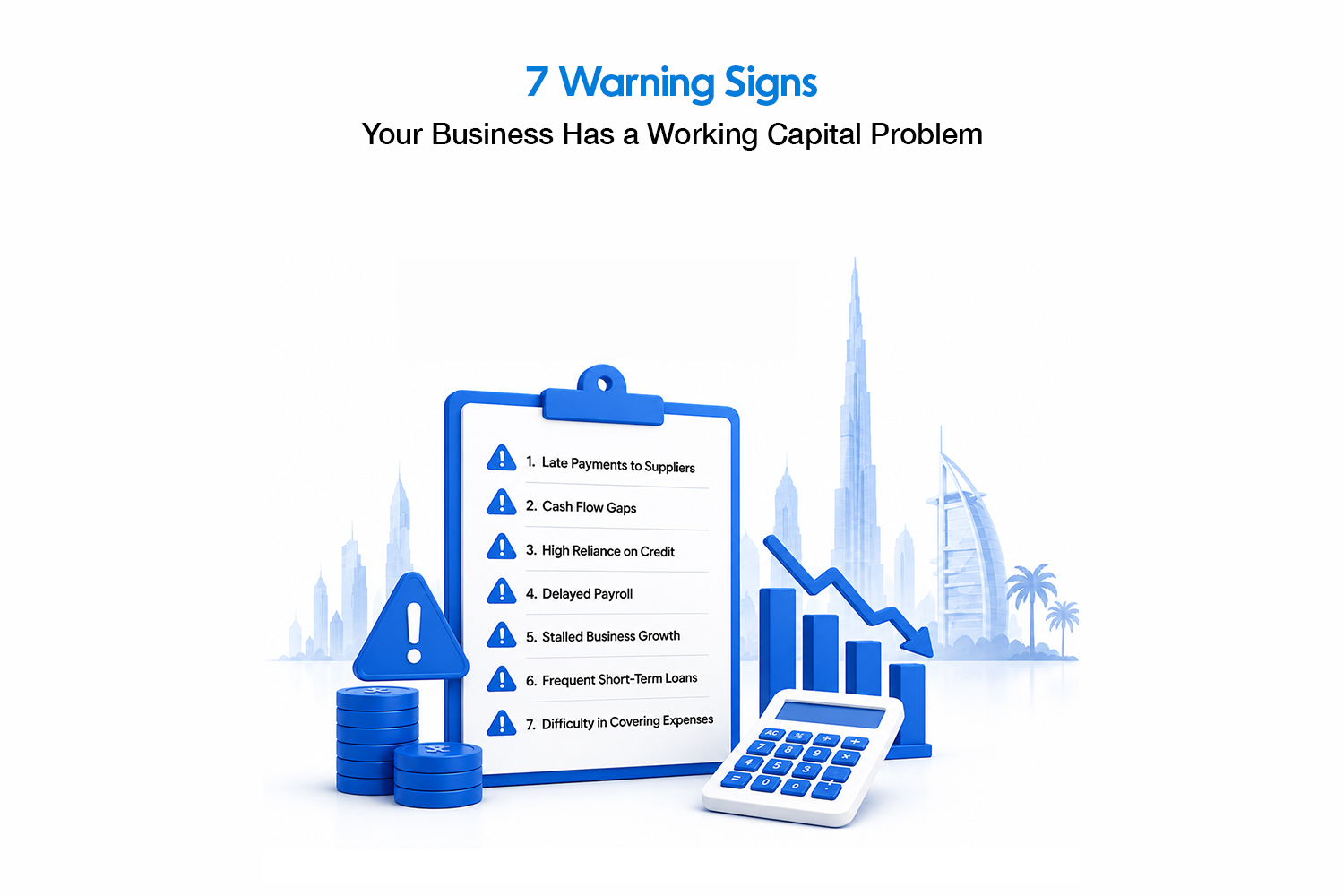
    7 Warning Signs Your Business Has a Working Capital Problem

    A business can be profitable on paper and still struggle to pay suppliers, employees, or operating expenses on time. This often happens when too much money is tied up in unpaid invoices, inventory, or other short-term assets. When your business cannot comfortably meet its day-to-day financial obligations, it may be experiencing working capital problems. For UAE SMEs, effective working capital management is particularly important when customer payment cycles are long, inventory requirements increase, or the business is growing faster than its available cash. But how do you know when a normal cash-flow challenge has become a serious working capital issue? Here are seven warning signs to watch for. 

    1. You Regularly Struggle to Pay Suppliers on Time 

    One of the clearest signs of working capital problems is consistently delaying supplier payments because cash is unavailable. If your customers pay you after 30, 60, or 90 days while suppliers expect payment much sooner, a timing gap can put pressure on your business. Repeatedly asking suppliers for extensions may also affect relationships, purchasing terms, and your ability to negotiate better deals. A healthy business should have enough liquidity to manage its operating cycle without constantly relying on payment extensions. 

    2. Your Profits Are Increasing, but Cash Is Not 

    Growing revenue does not automatically mean improving liquidity. 

    For example, you may record strong sales and profits but have most of your revenue sitting in outstanding invoices. Until customers actually pay, that money cannot be used to purchase inventory, pay expenses, or invest in growth. This is why businesses need to monitor both profitability and cash flow. If your sales are growing but your bank balance remains under pressure, it could be one of the important signs of working capital problems

    3. You Are Constantly Waiting for Customer Payments 

    Long payment cycles can create significant business cash flow problems, particularly for B2B businesses. Suppose your company completes a large order and issues an invoice for AED 200,000. If the customer pays after 60 days, you may have already incurred costs for inventory, employees, logistics, and operations. The business has earned the revenue, but the cash is still locked in receivables. Invoice discounting can help eligible businesses unlock a portion of the value tied up in outstanding invoices instead of waiting for the full payment cycle. Fincobox offers invoice discounting designed to help UAE businesses access liquidity against eligible invoices.  

    4. You Are Turning Down Growth Opportunities Because of Cash Constraints 

    Another important warning sign is having the demand, customers, or opportunity to grow but not enough working capital to act. You might need additional inventory to fulfil a large order, increase marketing spend before a seasonal sales period, or purchase materials for a new contract. If you repeatedly say, “We would do it if we had the cash,” your business may have a working capital shortage. Working capital should support growth rather than become a barrier to it. 

    5. Inventory Is Taking Too Long to Convert Into Cash 

    Excess inventory can tie up a significant amount of your business’s cash. If products remain unsold for extended periods, your money is effectively sitting in stock instead of being available for salaries, suppliers, marketing, or expansion. On the other hand, insufficient inventory can cause stockouts and lost sales. Effective working capital management therefore requires balancing inventory levels with actual demand, sales cycles, and cash availability. For e-commerce, D2C, manufacturing, and retail businesses, this becomes especially important during seasonal demand or rapid expansion. 

    6. You Depend on Credit to Cover Everyday Expenses 

    Using short-term credit occasionally is not necessarily a problem. However, if your business regularly needs external credit simply to cover routine expenses, it may indicate an underlying working capital issue. For example, repeatedly borrowing to pay suppliers, salaries, rent, or operating expenses can indicate that your cash conversion cycle needs attention. The goal should be to use financing strategically to bridge genuine timing gaps or support growth rather than constantly covering an unsustainable cash deficit. 

    7. Your Business Growth Is Creating More Financial Pressure 

    It may sound surprising, but rapid growth can actually create working capital problems

    Imagine your sales increase by 50%. That sounds positive, but you may simultaneously need to: 

    • Purchase more inventory 
    • Hire additional employees 
    • Spend more on marketing 
    • Fulfil larger orders 
    • Pay suppliers earlier 
    • Wait longer for some customers to pay 

    As a result, faster growth can require more working capital before the additional revenue reaches your bank account. For UAE SMEs experiencing this situation, flexible liquidity solutions can help bridge short-term gaps while the business continues growing. Fincobox provides solutions including Revenue-Based Liquidity, Invoice Discounting, Short-Term Working Capital, and Purchase Order Liquidity for eligible UAE SMEs.  

    How Can Businesses Solve Working Capital Problems? 

    The first step is identifying exactly where cash is getting stuck. 

    Review your: 

    • Accounts receivable and outstanding invoices 
    • Inventory turnover 
    • Supplier payment terms 
    • Customer payment cycles 
    • Operating expenses 
    • Cash conversion cycle 
    • Short-term financing requirements 

    Once you identify the gap, you can determine whether the solution involves improving collections, negotiating supplier terms, reducing excess inventory, improving forecasting, or accessing appropriate working capital financing in the UAE. For businesses with eligible outstanding invoices, invoice discounting can provide access to liquidity without waiting for customers to complete their payment cycle. Fincobox states that its invoice discounting solution can provide eligible businesses with up to 90% of invoice value, subject to its assessment and applicable terms.  For businesses with consistent revenue, Fincobox also offers Revenue-Based Liquidity, where funding is linked to business revenue rather than relying solely on a traditional fixed repayment structure.  

    Final Thoughts 

    Working capital problems rarely appear overnight. Delayed supplier payments, increasing receivables, slow-moving inventory, cash shortages, and missed growth opportunities can all signal that your business liquidity needs attention. The good news is that identifying these warning signs early gives you more options. For UAE SMEs, better cash-flow forecasting combined with the right financing strategy can help maintain liquidity while supporting sustainable growth. Fincobox provides non-dilutive liquidity solutions designed around different business needs, including invoice discounting, revenue-based liquidity, short-term working capital, and purchase order liquidity.  If your business is growing but cash flow is constantly under pressure, it may be time to look beyond revenue and start focusing on your working capital cycle. 

    Frequently Asked Questions 

    1. What are working capital problems? 

    Working capital problems occur when a business does not have sufficient short-term liquidity to comfortably manage its day-to-day financial obligations. They can arise from delayed customer payments, excess inventory, high operating costs, or mismatched payment cycles. 

    2. What are the common signs of working capital problems? 

    Common signs include regularly delaying supplier payments, struggling to cover operating expenses, waiting too long for customer payments, relying heavily on short-term credit, holding excess inventory, and missing growth opportunities because of cash constraints. 

    3. Why can a profitable business have working capital problems? 

    Profit and cash flow are not the same. A business can report revenue and profit while its cash remains tied up in unpaid invoices or inventory. This can create a liquidity gap even when the company is profitable. 

    4. How can SMEs improve working capital? 

    SMEs can improve working capital by collecting receivables faster, managing inventory efficiently, negotiating supplier terms, monitoring expenses, forecasting cash flow, and using appropriate financing solutions when necessary. 

    5. What is working capital financing in the UAE? 

    Working capital financing provides businesses with liquidity to manage short-term operational requirements and cash-flow gaps. Depending on the business and eligibility, options can include invoice discounting, revenue-based liquidity, and other short-term financing solutions. 

    6. Can Fincobox help with working capital problems? 

    Yes. Fincobox provides liquidity solutions for eligible UAE SMEs, including Invoice Discounting, Revenue-Based Liquidity, Short-Term Working Capital, and Purchase Order Liquidity. These solutions are designed to help businesses manage liquidity gaps and support growth. (Fincobox

    7. Is invoice discounting suitable for every business? 

    Not necessarily. It is generally most relevant to businesses with eligible outstanding invoices and established customer payment cycles. Fincobox evaluates business and financial information before determining eligibility and applicable funding terms. (Fincobox

  • Business Loan vs Revenue-Based Financing: Which is best for you?

    Business Loan vs Revenue-Based Financing: Which is best for you?

    Access to the right funding can be the difference between maintaining steady growth and missing valuable business opportunities. Whether you’re expanding operations, purchasing inventory, hiring employees, or investing in marketing, choosing the right financing option is essential for long-term success. For many businesses in the UAE, the traditional business loan has been the default choice for decades. However, as industries evolve and business models become more dynamic, alternative funding solutions such as Revenue Based Financing UAE are becoming increasingly popular. Both financing options offer access to capital, but they differ significantly in eligibility, repayment structure, flexibility, and suitability for different business models. Understanding these differences will help you choose the solution that best aligns with your business goals. 

    Understanding SME Business Loans 

    An SME Loan UAE is a traditional financing product offered by banks and financial institutions. Businesses borrow a fixed amount and repay it over an agreed period through fixed monthly instalments, usually with interest. 

    Business loans are commonly used for: 

    • Business expansion 
    • Equipment purchases 
    • Office renovations 
    • Fleet acquisition 
    • Long-term investments 
    • Operational funding 

    Many lenders require businesses to demonstrate strong financial history, healthy cash flow, and repayment capability before approving a loan. 

    Advantages of SME Loans 

    Predictable Repayment Schedule 

    Fixed monthly repayments make budgeting easier for businesses with stable and predictable cash flow. 

    Larger Loan Amounts 

    Traditional lenders often provide higher funding amounts for businesses with established financial records. 

    Suitable for Long-Term Investments 

    Business loans are ideal for purchasing machinery, commercial property, or other long-term assets. 

    Established Financing Option 

    Banks remain a preferred choice for businesses with strong credit profiles and long operating histories. 

    Challenges of Traditional Business Loans 

    While business loans remain valuable, they also present several challenges. 

    • Lengthy approval processes 
    • Strict documentation requirements 
    • Fixed repayment obligations regardless of revenue 
    • Collateral requirements in many cases 
    • Limited flexibility during slower business periods 

    For businesses with fluctuating income, fixed repayments can place significant pressure on cash flow. 

    What Is Revenue-Based Financing? 

    Revenue Based Financing UAE is an alternative funding solution where businesses receive capital based on their current or projected revenue. 

    Instead of fixed monthly instalments, repayments are linked to a percentage of future revenue. 

    This means: 

    • Higher repayments during strong sales periods 
    • Lower repayments when revenue slows 
    • Better alignment between funding and business performance 

    Revenue-Based Financing is particularly attractive for businesses experiencing rapid growth or seasonal sales fluctuations. 

    Benefits of Revenue-Based Financing 

    Flexible Repayment 

    Repayments adjust according to business revenue, helping businesses manage cash flow more effectively. 

    No Equity Dilution 

    Unlike equity investment, businesses retain complete ownership and decision-making control. 

    Faster Access to Funding 

    Compared to many traditional lending processes, Revenue-Based Financing often provides quicker approvals and faster access to capital. 

    Supports Business Growth 

    Funding can be used for: 

    • Inventory purchases 
    • Marketing campaigns 
    • Hiring 
    • Technology upgrades 
    • Product development 
    • Market expansion 

    Ideal for High-Growth Businesses 

    Businesses with recurring or growing revenue often benefit from financing that scales alongside their performance. 

    Business Loan vs Revenue-Based Financing 

    Which Option Is Best for Your Business? 

    The answer depends on your business model, financial position, and growth objectives. 

    Choose an SME Loan if: 

    • Your business has stable cash flow. 
    • You need financing for long-term assets or infrastructure. 
    • You are comfortable with fixed monthly repayments. 
    • You meet traditional lending requirements. 

    Choose Revenue-Based Financing if: 

    • Your revenue fluctuates seasonally. 
    • You operate an ecommerce, SaaS, D2C, or subscription-based business. 
    • You want repayments that align with business performance. 
    • You need funding quickly to seize growth opportunities. 
    • You prefer flexible financing without giving up equity. 

    Why More UAE SMEs Are Choosing Flexible Financing 

    The UAE’s business landscape is changing rapidly. SMEs are expanding into ecommerce, entering new GCC markets, investing in digital transformation, and responding to evolving customer expectations. 

    These businesses often require funding that adapts to growth rather than restricting it. 

    Flexible financing solutions allow companies to: 

    • Maintain healthier cash flow 
    • Invest confidently in expansion 
    • Manage seasonal demand 
    • Improve working capital 
    • Respond quickly to market opportunities 

    This explains why Revenue-Based Financing is becoming an increasingly attractive alternative to conventional business loans. 

    How Fincobox Supports UAE Businesses 

    Every business has different financing needs, and selecting the right funding solution should depend on your operational model and growth strategy not a one-size-fits-all product. 

    Fincobox helps UAE businesses access flexible financing solutions tailored to their unique requirements. Whether you’re looking for growth capital through Revenue-Based Financing or need support to strengthen working capital and improve cash flow, Fincobox offers transparent, technology-driven financing solutions designed for modern businesses. 

    By simplifying access to capital and reducing financial barriers, Fincobox enables businesses to focus on innovation, expansion, and sustainable growth. 

    Final Thoughts 

    There is no universal answer when comparing traditional business loans and Revenue-Based Financing. The right solution depends on your business goals, cash flow patterns, and financing requirements. Traditional SME loans remain a strong choice for businesses with predictable income and long-term investment plans. However, for companies operating in fast-moving industries where revenue can fluctuate, Revenue-Based Financing provides greater flexibility and better alignment with business performance. Understanding these differences allows business owners to make informed financial decisions that support long-term success. With the right financing partner, such as Fincobox, UAE businesses can access capital that not only meets today’s needs but also supports tomorrow’s growth opportunities. 

    Frequently Asked Questions (FAQs) 

    1. What is the difference between an SME loan and Revenue-Based Financing? 

    An SME loan involves borrowing a fixed amount with scheduled monthly repayments, while Revenue-Based Financing provides funding that is repaid as a percentage of future business revenue, offering greater flexibility. 

    2. Which businesses are best suited for Revenue-Based Financing? 

    Revenue-Based Financing is ideal for ecommerce businesses, SaaS companies, D2C brands, subscription-based businesses, and SMEs with recurring or variable revenue. 

    3. Are SME loans better than Revenue-Based Financing? 

    Neither option is universally better. SME loans are suitable for stable businesses making long-term investments, while Revenue-Based Financing is often better for businesses seeking flexible repayments that align with sales performance. 

    4. Does Revenue-Based Financing require giving up ownership? 

    No. Revenue-Based Financing is a non-dilutive funding option, allowing business owners to access capital without giving up equity or control of their company. 

    5. How does Fincobox help UAE businesses choose the right financing solution? 

    Fincobox works with businesses to understand their revenue model, cash flow, and growth objectives, helping them access financing solutions that improve liquidity, support expansion, and strengthen long-term financial resilience.